
Approach
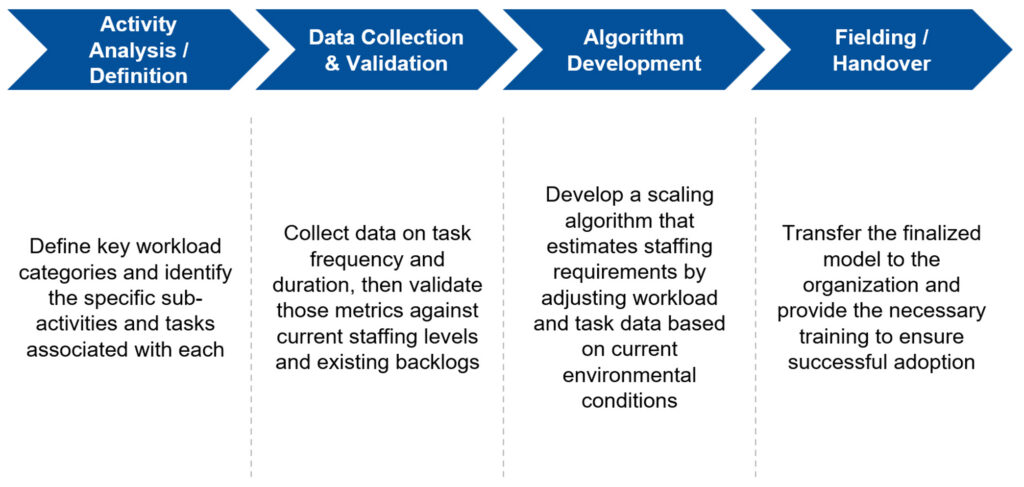 Aminad addressed the challenge through two integrated workstreams: workload-driver algorithms and a budget-allocation tool.
For the workload-drive algorithms, the team developed tailored algorithms for each mission-support function, translating operational activities into workforce requirements—for example, converting help-desk ticket volume into full-time personnel needs. These models were built through a four-phase development and deployment framework.
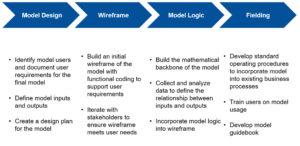 In parallel, Aminad designed a mission support budget-allocation tool to support scenario planning and risk assessment. The team facilitated requirements workshops with stakeholders from tactical teams through executive leadership, validated the proposed solution through a static wireframe, developed the underlying mathematical models, and produced change-management materials to support pilot implementation.
Impact
The resulting workload algorithms provide the organization with a more defensible basis for future-year labor forecasting, PPB&E resource decisions, strategic realignments, workforce optimization, and recruitment planning. They enable leadership to assess staffing needs against projected workload and identify potential skill gaps before they become operational constraints.
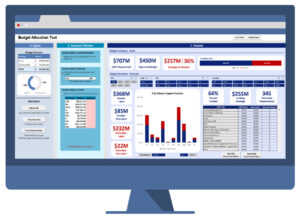 The budget-allocation tool replaced a perceived “black box” process with a more standardized and transparent workflow. Mission-support leaders gained visibility into how funding decisions are calculated, a structured way to assess the implications of allocation strategies, and a stronger role in enterprise decision-making. Aminad supported a successful pilot during the FY2027 cycle and helped institutionalize the new approach through an executive memo defining policy, workflow standards, and expectations.


